



Maintaining a consistent flow of engaging blog content is an ongoing challenge for marketers. The traditional content creation workflow—from ideation through research, planning, content development, and SEO optimization—demands significant bandwidth from marketing teams. As a result, many teams find themselves caught between demanding content schedules and maintaining quality standards, leading to missed deadlines and content that underperforms against both engagement metrics and search visibility goals.
Typeface's enterprise-grade AI content platform fundamentally transforms this equation. By automating up to 70% of the content creation process—from keyword research and optimization, outline generation to creating complete first drafts—marketing teams can redirect their expertise to strategic refinement. This allows teams to scale their blog production from 3-4 posts monthly to 10-12 posts, while maintaining a consistent brand voice.
In this article, we'll take a look at some examples of impactful blog posts to give you some inspiration. We'll also show you how Typeface’s AI capabilities can help improve your blog content creation strategy, streamline your workflow and elevate user experience, helping your team work smarter and deliver better results.
Why is a blog important?
The effectiveness of blog as a marketing channel is well-documented. According to a CMI survey, blogs are the most frequently used type of content by marketers for demand generation.

Strategic blog marketing can deliver measurable value across multiple vectors: enhanced organic traffic acquisition, strengthened market positioning, and elevated brand authority. This translates directly into measurable ROI through sustained audience growth and increased customer lifetime value.
However, creating impactful blogs that truly resonate and align with your company's goals demands a thoughtful approach. It requires a solid blog marketing strategy that focuses on SEO, understanding your audience, and delivering consistent value that addresses their needs at every stage of their journey.
Modern AI systems can be invaluable in executing this strategy, as they help create engaging content that aligns with SEO goals, audience preferences, and your own brand guidelines.
What are the benefits of using AI for blog writing?
AI transforms blog creation by significantly reducing the writing time and increasing content output, but the benefits go far beyond speed. With over 80% of professionals reporting enhanced productivity from AI tools, these platforms accelerate production, enhance SEO performance, and maintain brand consistency, all while freeing you to focus on strategy and adding your unique insights rather than starting from a blank page.
Typeface is one such AI content platform that distinguishes itself through audience-centric content generation and advanced brand voice preservation capabilities. With Web Agent, you can generate content outlines and get complete first drafts based on a few key inputs. This allows you to focus on refining the content and adding your unique insights, rather than starting from scratch every time.
Another advantage of using this AI content platform is its ability to optimize content for SEO. Typeface's AI can suggest region and intent-specific keywords and phrases that will help your blog posts rank higher in search results. You can also provide keywords for your own research to use in the content. As the Agent generates the blog, it seamlessly incorporates these keywords into the content.
The platform also comes with AI features to refine the content for SEO and generate multiple variations for different audiences and regions. To edit and refine your text, there's Generative Refine tool that can help in polishing or reworking the content.
- Related: Check out our blog, “How to Use a Blog Post Generator,” to learn more about using this AI for blog generation.
Now, if you're looking for some blog post examples to guide you in your blog creation process, we've compiled some to help spark your creativity and provide some inspiration.
5 blog post examples to get you started
To help you get started, here are some blog post examples that can inspire your content creation process. Each blog writing example covers a different blog writing format and can be tailored to fit your brand's goals and audience.
1. How-to blog post example
How-to posts are great for traffic generation and customer education because they provide practical, actionable advice for solving your customers' most urgent problems. They are usually created for guiding your readers through a process or teaching them how to accomplish a specific task.
Here are some key elements that should be present in a well-crafted how-to blog post:
- Clearly defines the specific goal or task
- Provides sufficient context before tactical guidance
- Organizes steps in a logical sequence
- Includes visuals or diagrams to enhance understanding
- Ends with additional tips or suggestions for further exploration
This blog from Squarespace is an excellent example of an effective how-to guide. The post demonstrates an understanding of its target audience, speaking directly to potential travel bloggers, addressing their likely questions, concerns, and motivations. It opens with the potential benefits of creating travel blogs (attracting an audience, building reputation, potentially earning money), immediately creating value and motivating readers to continue reading.
The article then breaks down the complex process of creating a blog into eight manageable steps. Each step builds logically on the previous one, guiding readers from the initial concept to full implementation. This step-by-step approach prevents readers from feeling overwhelmed and provides a clear path forward.

What makes this how-to blog particularly effective is its ability to balance educational content with subtle promotion. While clearly a Squarespace marketing piece, it provides genuine value to the reader. The promotional elements feel like helpful recommendations rather than pushy sales tactics.
The blog also links to other valuable Squarespace resources to improve understanding, while improving the page’s SEO. As for the CTAs, the post uses multiple strategic, contextual CTAs, subtly guiding readers to try Squarespace for building their travel website.
2. Listicle post example
Listicle blog posts are a favorite among people. Their scannable format aligns perfectly with modern audiences' browsing habits, leading to longer time-on-page and higher engagement rates. They work especially well for sharing tips, ranking items, or compiling favorite resources. So, whether you're looking to entertain, inform, or persuade, listicles offer a versatile way to engage your audience.
Here are some key elements that should be present in a well-crafted listicle:
- A catchy headline (featuring a number) optimized to increase clicks
- Brief introduction that outlines the purpose of the list
- Clear and concise points or list if items, each paired with a short description
- Visual elements like infographics, charts, or branded images to boost social sharing
This blog piece from the haircare brand, OUAI, is a quintessential example of a listicle engineered for maximum reader engagement. It begins with a compelling, number-driven headline "The 6 Best Brushes For an At-Home Blowout" that quickly communicates what the content promises.
Each brush recommendation follows a reader-friendly format that makes the content scannable. For each product, the writer includes three key sections: appropriate hair type, recommended hair length, and why it's great for home use. This helps readers quickly determine if a recommendation applies to them.
The product images of the different hairbrushes are clear, well-lit, and provide a tangible visual reference to accompany the written descriptions. The listicle also brilliantly incorporates credibility by including specific tips from professional hairstylists.
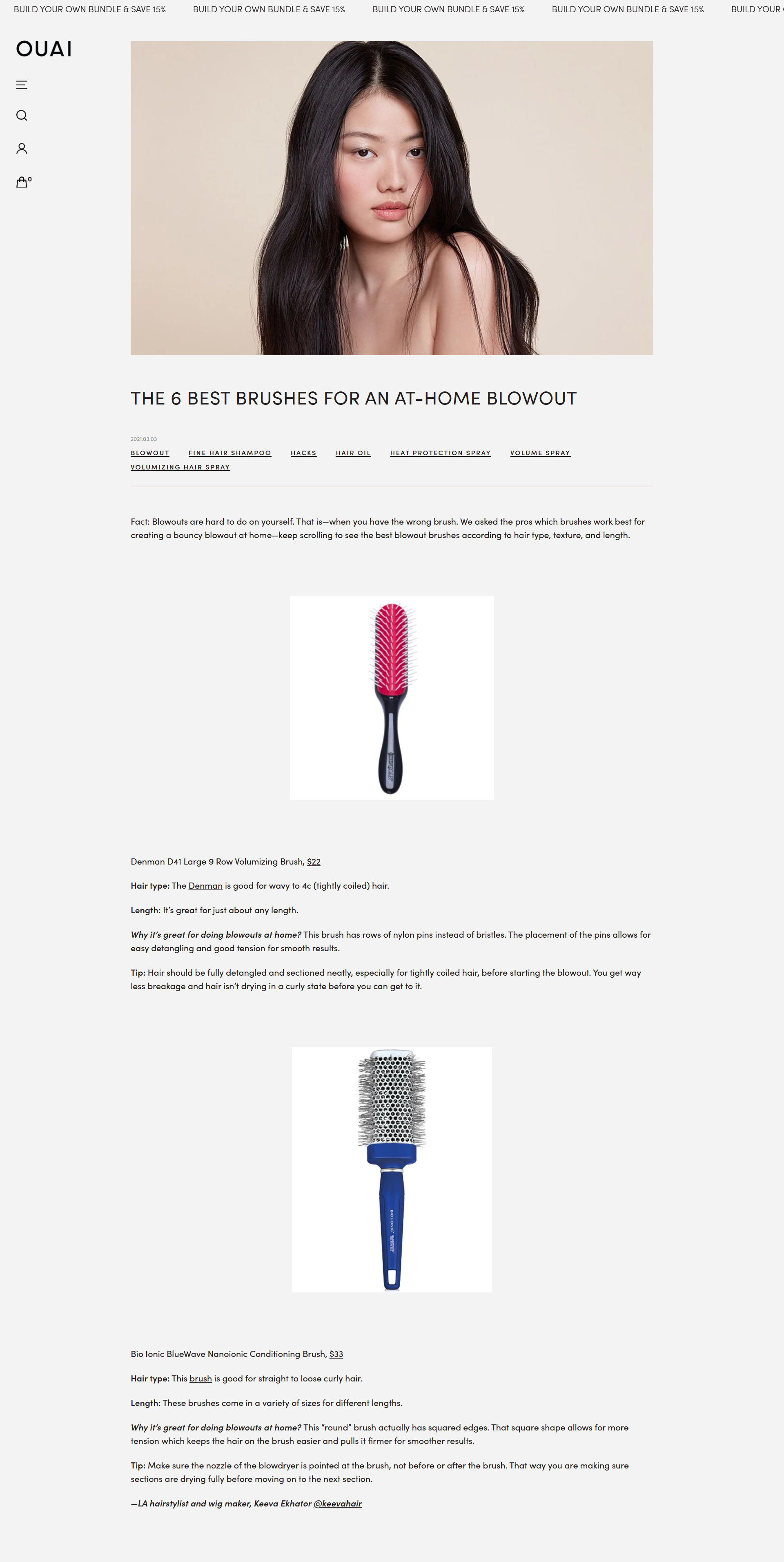
Moreover, the article subtly addresses potential reader objections by including practical tips with each recommendation. These aren't just product descriptions but mini tutorials that make readers feel more confident about purchasing the brush.
3. Case study post example
Case studies are bottom-of-funnel content pieces that showcase real-life examples of how your product or service has helped customers achieve their goals. They typically follow a structured format that involves identifying the challenges that your customers faced, the solutions that were implemented, and the results or outcomes of these efforts. When prospective clients see tangible evidence of your product or service benefiting others similar to themselves, they are more likely to feel confident in choosing your company to meet their needs.
Here are some key elements that should be present in a well-crafted case study post:
- Background information on the case study topic
- Detailed explanations of the actions implemented
- Supporting data demonstrating outcomes and impact
- Lessons learned and suggested recommendations
5 tips for writing a blog post
People have been writing since the dawn of time. Here are a few tips, pointers, and tricks writers have picked up over the years.
Find sources of inspiration
Does music fill your mind with words? Do you find clarity in writing outdoors? Does your brain seem to think better with background noise? Do you prefer complete silence when you write?
For everyone, what works best to inspire words is different. The best way to find your most productive environment is through trial and error. The good news is it typically doesn't take long to find out what doesn't work and what does.
Find a good place to write
In addition to inspiring the words within you, it is also good to find a place to write. In other words (no pun intended), that means a place where you can work without constant interruptions. Ask any writer, few things are more difficult than having a line of thought interrupted, then trying to resume.
It is also a good idea to have a place to write where you have all the materials you will need. Additionally, and especially if you spend hours at the keyboard, it is meaningful to have a supportive and comfortable chair (and desk setup if you use one). Try writing in an uncomfortable chair for four or five hours, and then see how much inspiration you feel to continue writing.
Write. And then write some more
It is a common cure for writer's block, and it is also the easiest way to get started when creating a blog. Just write. While that sounds simple, it is also one of the more difficult concepts to grasp. You can spend hours (again, ask any writer) waiting for the right word or sentence and still have written nothing.
Just write. Want to start a blog for your business? Don't worry about the perfect sentence, story, or idea, and remember, you can always go back and edit. The most difficult part is often getting started, and the easiest way to get over that hurdle is to start.

Read blog post examples
Getting ideas, concepts, and motivation from other blog post examples is a good idea. Just be careful to remember that imitation is the highest form of flattery, not plagiarism. Simply put, ideas and inspiration are free for the taking. Just leave the author's words alone.
Did you like those blog examples that used humor to lighten a serious topic? Did you find the format and layout of that one article easy to follow? Examples of blog posts are excellent ways to find your own words and ideas and a good way to help you get started.
Write what you know
Another good thing about writing blogs is that they normally are written around and about topics familiar to the author. That means you will most often be writing about what you know, have experienced, or have insight into.
That means blogging about your business. That looks like blogs related to your industry, product, or service. It means writing about what you know. You have experiences, insights, and knowledge that others do not. Write about that.
Learn how to develop your unique brand voice, design a beautiful website, and create content that grabs attention with a little help from us.
5 blog examples
These are some of the most popular types of blogs today and, hopefully, a source of inspiration for you.
Food and travel blogs
Food and travel rank as some of the most popular blog topics. Examples of blog posts like food and travel can teach us many things, like how to relate to your audience. To begin with, who does not eat or travel? Exactly.
These blog examples can also show us how to tie our business into these blogs and conversations. Do you travel for work? Do you eat at work? Using well-written examples of blog posts on food and travel can help you find creative ways to relate to your customers. Blogs will also help make your business or brand more relevant and relatable.
Lifestyle blogs
Customer engagement is the first, second, and third most important reason for using blogs. That also means engaging your audience in a variety of ways, such as informing or entertaining them. People from all walks of life like and want to see how the other half lives, and they want to be informed and entertained.
Lifestyle blogs are great blog examples of the types of blogs that do just that. No, a blog does not need to be directly or even remotely related to your business. In fact, blogs on your business website do not need to be related to your company in any way. And if you choose, after writing a wonderfully entertaining blog, you can add a simple CTA at the end.
Business blogs
Although writing about your business or industry is not a requirement, it is a good idea if you choose. Many people read blogs for sources of information or insight into a particular line of work. Those are also often people who are not as familiar with your business or industry.

Business blogs offer an ideal opportunity to educate and win potential customers. These types of business-related blogs also afford the opportunity to position and frame your company and brand as an expert and a leader.
Personal blogs
Examples of blog posts can also be personal blogs. Do you want to give your company or brand a more human feel? Would you like to connect more closely with your customers? Personal blogs are simply that, and by sharing the personal anecdotes of your life, personal blogs offer one more way to engage your customers.
You can also use personal blogs to allow customers to share their experiences with your product or service. This is also a customer-driven technique that has gained traction in recent years in the marketing world. Finding strong blog writing examples of personal blogs is an effective way to stir your imagination and get started.
Self-help, DIY, and how-to blogs
Many businesses use blogs to provide helpful information and tips for their customers. These blogs can range from self-help tips to DIY guides and how-to blogs. If you have information to help your customers, blogs are a popular forum to share those DIY and self-help tips.
This style of blog does more than engage your audience, but it also presents your business as a trusted source. Additionally, instructional blogs that add value to your customers also lend credibility to your image.
Find your brand’s voice
Blogs are no longer an afterthought or a quirky little section on your business website. When used effectively, blogs can empower your business, promote your brand, and most importantly, help you engage with your customers.
Want to find your brand's voice, or even give your brand a voice? Are you curious about blogging for local search results? Using blogs to connect with your audience will also offer insights into how your customers respond. What kind of blogs are people reading, and what kind of blogs are people not reading?
Using blogs to not only find the voice of your brand, but also the voice that resonates with customers will help you connect. From building trust and credibility to making customers feel like friends, blogs are a smart option for any business.
Do you want to start a blog for your business? Would you like to learn more about how to use blogs to improve your image, brand, and business? How about small business blog post optimization techniques?
Mailchimp can help. If you are ready to begin blogging, and to learn how to promote your small business blog, contact Mailchimp. Get the help and insights you need to start blogging and start writing great blogs today.